
Complete Guide to Study in the UK from Bangladesh (2026)
Navigating the process of studying in the UK from Bangladesh can feel incredibly overwhelming, especially with the sheer volume of conflicting, fragmented, and often outdated information available online.
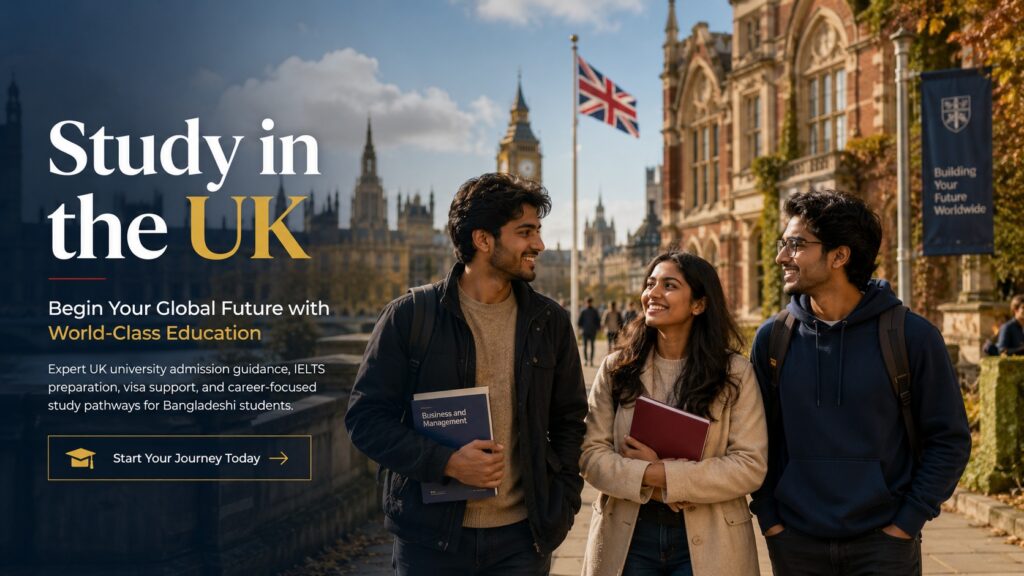
Relying on inaccurate advice in today’s strict regulatory climate isn’t just frustrating; it can be financially devastating. A single mistake regarding the latest immigration rules, bank solvency calculations, or university criteria can lead to severe consequences: non-refundable lost deposits, heartbreaking visa rejections, and a permanent mark on your international immigration record.
That is where NextStep steps in. As your definitive source for 2026 UK university admissions and immigration compliance, our expert counselors cut through the noise. We provide up-to-date, meticulously accurate guidance tailored to your academic profile. From shortlisting universities to securing your visa, we ensure your transition from Bangladesh to Britain is seamless, secure, and successful.
Why Bangladeshi Students Choose the United Kingdom
The UK higher education system is globally renowned for its academic rigor, historic prestige, and innovative teaching methods. However, beyond the classroom, the UK offers highly strategic advantages that directly benefit the career and financial trajectories of international students.
Shorter Course Durations and the Graduate Route Visa
One of the most significant financial advantages of the British education system is the intensive, streamlined nature of its degree programs. Unlike the United States or Canada, where a Bachelor’s degree typically takes four years and a Master’s takes two, the UK system is highly accelerated. A standard Bachelor’s degree takes three years, while a Master’s degree takes only one year to complete. This shorter duration presents a massive financial advantage, effectively saving Bangladeshi students an entire year of tuition fees and living expenses while allowing them to enter the global workforce faster.
Furthermore, the UK government offers the highly attractive Graduate Route Visa. This post-study work visa allows international students who have successfully completed an undergraduate or master’s degree to remain in the UK for up to two years (three years for PhD graduates). Crucially, you do not need a prior job offer or sponsorship to apply for the Graduate Route. This provides an invaluable window to seek employment, gain international work experience, and build a professional network in one of the world’s strongest economies. You can verify the latest official regulations regarding post-study work rights directly through the UK Council for International Student Affairs (UKCISA).
Access to Russell Group Universities
The UK is home to the prestigious Russell Group, a collection of 24 world-class, research-intensive universities (often compared to the US Ivy League). Institutions like the University of Manchester, King’s College London, and the University of Birmingham offer degrees that hold immense global weight. For Bangladeshi students, graduating from a Russell Group university significantly elevates employability, opening doors to top-tier multinational corporations both back home in Bangladesh and across the globe.
Admission Requirements for UK Universities
While achieving your target score in your English proficiency test is a vital prerequisite step, the university admission process itself evaluates your core academic background. The criteria vary depending on the institution’s ranking and your desired level of study.
Undergraduate (Bachelors) Requirements
Direct entry into a three-year UK Bachelor’s program generally requires strong academic standing.
- A-Levels: Typically, universities look for standard A-Level grades ranging from BCC to AAA, depending on the competitiveness of the course.
- HSC (Higher Secondary Certificate): Because the HSC curriculum differs from the UK system, students with an HSC background (usually requiring a GPA of 4.0 to 5.0) often need to complete a one-year International Foundation program before progressing to the first year of their Bachelor’s degree.
- English Language: A valid English language test certificate meeting the specific minimum band requirements of the institution.
Postgraduate (Masters) Requirements
Applying for a one-year Master’s degree requires a solid undergraduate foundation.
- Academic Background: A four-year Bachelor’s degree from a recognized Bangladeshi university. Most UK institutions require a CGPA of at least 2.5 to 3.0 out of 4.0 (equivalent to a UK 2:2 or 2:1 degree).
- Work Experience: While generally not required for standard Master’s degrees, specialized programs like an MBA often require 2 to 3 years of verifiable managerial work experience.
- Supporting Documents: A meticulously crafted Statement of Purpose (SOP) detailing your career goals, updated CV, and two academic or professional reference letters.
UK Student Visa and Financial Proof
Securing an unconditional offer from a university is only half the battle; navigating the UKVI (UK Visas and Immigration) requirements is where technical precision is paramount. To apply for the UK Student Visa, you must first obtain a Confirmation of Acceptance for Studies (CAS) from your chosen university.
Recent financial policy shifts have tightened the regulations surrounding student immigration. Currently, you must demonstrate that you have enough liquid cash to cover your first year’s tuition fees plus your living costs. Crucially, these funds must be held in an approved Bangladeshi bank account for a consecutive period of 28 days before you apply for your visa. Additionally, it is vital to account for recent increases in the Immigration Health Surcharge (IHS) and be aware of the recent policy changes restricting dependent visas for students on non-research taught master’s courses.
To ensure your financial documents are flawlessly prepared, understand the new UK maintenance fund requirements by visiting our dedicated visa compliance portal.
Tuition Fees and Living Costs in the UK
Budgeting accurately is critical for a stress-free study abroad experience. While costs vary by region and university tier, here is a realistic breakdown for the 2026 academic intake:
- Tuition Fees: Standard classroom-based undergraduate and postgraduate degrees typically range from £14,000 to £22,000 per year. Laboratory-based or clinical degrees (like engineering or medicine) can range from £20,000 to over £35,000 annually.
- Living Costs: UKVI sets specific benchmarks for living costs. If you study in London, you must show £1,334 per month (for up to 9 months). If your university is located outside of London, the requirement is £1,023 per month.
For a deeper dive into managing your budget, currency conversion, and finding affordable accommodation, explore our complete guide on UK tuition fees and living costs.
Scholarships for Bangladeshi Students
While studying in the UK requires a significant financial investment, there are numerous avenues to reduce the burden. Universities value diversity and frequently offer regional bursaries specifically for South Asian students, often granting automatic tuition fee discounts ranging from £1,000 to £5,000 based on academic merit.
Additionally, highly competitive, fully-funded government scholarships are available for exceptional candidates, including the Chevening Scholarships, Commonwealth Scholarships, and the GREAT Scholarships program.
To explore eligibility criteria and application deadlines for financial aid, visit our dedicated hub for UK scholarships for Bangladeshi students.
🇬🇧 UK Study Abroad FAQs
Frequently Asked Questions About Studying in the UK
Explore quick answers about UK universities, tuition fees, scholarships,
student visas, IELTS requirements, work opportunities, and student life
for Bangladeshi students planning to study in the UK.
The UK offers globally recognised universities, shorter degree durations, strong career opportunities, multicultural student communities, and internationally respected qualifications that are valued worldwide.
The total annual cost usually ranges between £20,000 and £45,000 depending on tuition fees, accommodation, lifestyle, and city of residence.
Yes. International students are generally allowed to work up to 20 hours per week during academic sessions and full-time during official holidays.
Yes. Many UK universities provide merit-based scholarships, bursaries, tuition discounts, and international student funding opportunities for eligible applicants.
Most UK universities require an IELTS score between 6.0 and 7.0 depending on the university, programme, and study level.
Common requirements include a valid passport, CAS letter, financial documents, academic certificates, IELTS results, TB test certificate, and visa application forms.
Cities such as Sheffield, Coventry, Leicester, Birmingham, and Glasgow are generally more affordable than London while still offering excellent universities and student facilities.
Yes. Next Step provides complete support for university selection, applications, scholarships, IELTS preparation, financial documentation, and UK student visa processing.