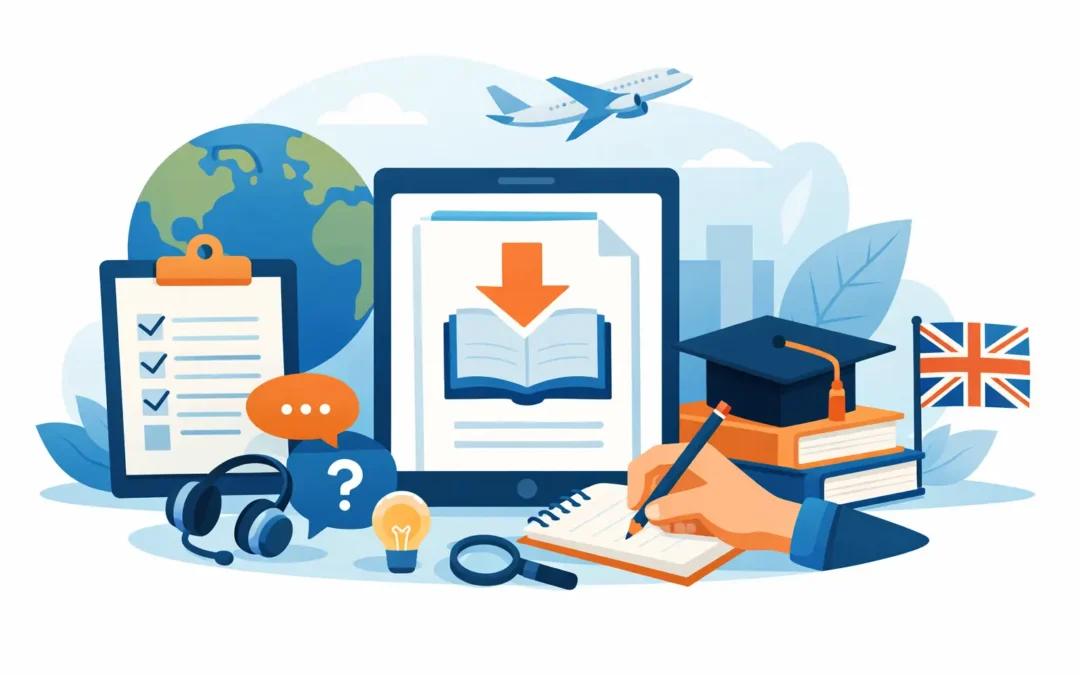
A student aiming for Canada may prefer one test, while a nurse planning registration abroad may feel stronger in another. That is why the question, is PTE easier than IELTS, does not have one universal answer. The easier exam is usually the one that matches your English level, your test-taking style, and the score requirements of the institution or visa pathway you are targeting.
For many candidates in Bangladesh, the real issue is not which exam is simpler on paper. It is which exam gives them the best chance of reaching their target score quickly, confidently, and with fewer repeat attempts. If you understand how both tests work, the choice becomes much clearer.
Is PTE easier than IELTS in real exam conditions?
PTE and IELTS both assess the same core skills – speaking, listening, reading, and writing. The difference lies in how those skills are tested and scored.
PTE is fully computer-based. You speak into a microphone, type your answers, and receive AI-based scoring. IELTS offers more flexibility. Depending on the centre and version, you may complete reading, listening, and writing on paper or computer, while the speaking test is usually a live interview with an examiner.
That single difference changes the experience dramatically. Some students feel more relaxed speaking to a computer because there is no face-to-face pressure. Others perform far better with a human examiner because conversation feels more natural than speaking into a headset in a quiet test room.
So, is PTE easier than IELTS? It can be, especially for candidates who are comfortable with technology, can type quickly, and do well under fast-paced timed sections. IELTS may feel easier for those who prefer traditional question types, clearer pacing, and direct human interaction in speaking.
Where PTE often feels easier
PTE is popular among candidates who want a more standardised test experience. The scoring is machine-based, which means many students see it as more predictable. If your pronunciation is clear, your grammar is accurate, and your response structure is strong, you may benefit from that consistency.
The speaking section is one reason many students lean towards PTE. There is no examiner sitting in front of you. For shy candidates, that removes a layer of anxiety. You simply respond to prompts such as read aloud, repeat sentence, or describe image. If you have trained with the format and built fluency, this can feel manageable.
PTE also suits students who are strong at integrated tasks. In several sections, one answer supports more than one skill. A good response can help your speaking and reading, or listening and writing, at the same time. For strategic test-takers, this creates score-building opportunities.
Results are another practical advantage. PTE scores often arrive faster than IELTS results. If you are working with university deadlines, visa timing, or a last-minute application, that speed matters.
IELTS remains the more familiar exam for many students, and familiarity itself reduces stress. The task types are widely known, and there is a huge amount of public awareness around band scores, university requirements, and preparation methods.
The speaking test is a major advantage for candidates who communicate better in real conversation. In IELTS, you talk to a person, not a machine. A live examiner can usually follow your accent, recognise natural pauses, and respond to your answers in a more human way. If you can build rapport and speak with confidence, IELTS speaking may feel far more natural than PTE.
Writing is another area where some students find IELTS easier. The tasks are direct: one report or visual description in Task 1 and one essay in Task 2 for Academic, with different task types in General Training. PTE writing may appear shorter, but it demands precision, typing speed, and close control over format.
IELTS listening and reading can also feel less intense because the rhythm is more familiar. PTE often moves quickly, and one moment of lost concentration can affect multiple responses.
The biggest factor is your personal profile
Students sometimes ask which test has the higher success rate. That is not the most useful question. A better question is: what kind of candidate are you?
If you type fast, adapt well to screens, and prefer objective patterns, PTE may suit you. If you express yourself better in conversation, like having a little thinking space, and prefer classic exam structure, IELTS may be the stronger option.
Your current English level matters too. Candidates with good spoken fluency but weaker computer skills may struggle in PTE despite having strong language ability. On the other hand, a student with average conversational confidence but strong pattern recognition and disciplined practice may do very well in PTE.
This is why expert guidance matters. A proper diagnostic test can reveal which format gives you a better scoring opportunity, rather than forcing you into the exam your friends chose.
Is PTE easier than IELTS for speaking?
For nervous speakers, PTE often seems easier at first. You do not need to maintain eye contact, manage body language, or respond to a stranger in real time. But PTE speaking has its own pressure. You must start quickly, keep a steady pace, pronounce clearly, and avoid long pauses. The microphone picks up everything, and the scoring system rewards fluency and clarity.
IELTS speaking feels more natural for candidates who can hold a conversation. If you make a small mistake, you can still recover. The examiner hears meaning, tone, and communication in a broader way. That can work in your favour if your English is functional and confident, even if not perfect.
So if you are asking, is PTE easier than IELTS for speaking, the answer depends on whether you fear machines less than people.
Writing, reading, and listening: small differences, big impact
In writing, IELTS rewards clear development of ideas, task response, vocabulary, and grammar. PTE writing tends to reward structure, concision, and accuracy under time pressure. Students who can think and type at the same time may find PTE more efficient. Students who need time to plan and develop arguments may prefer IELTS.
In reading, PTE can feel more technical because of the integrated and timed nature of tasks. IELTS reading demands careful comprehension and speed, but the question types are often easier to understand after proper practice.
In listening, IELTS gives you one chance to follow audio and transfer answers correctly. PTE listening can be mentally demanding because of note-taking, summarising, and quick transitions between tasks. Neither is automatically easier. One simply may suit your habits better.
Choosing the right test for study, migration, or work
Before you register, check what your university, licensing authority, or immigration route accepts. This step comes first. There is no benefit in choosing the easier exam if it does not match your application requirement.
After that, think practically. How comfortable are you with computer-based testing? How strong is your spoken fluency? Do you need fast results? Have you taken mock tests in both formats? These questions are more useful than general opinions online.
For students preparing for study abroad or professional pathways, structured coaching can save both time and exam fees. At NextStep, many candidates make the right choice only after comparing mock performance, target score needs, and timeline pressure. That approach is far more effective than guessing.
So, which one should you take?
Choose PTE if you are confident with computers, comfortable speaking into a microphone, and want a fast, highly structured exam. Choose IELTS if you prefer human interaction, want a familiar format, and feel stronger in traditional reading and writing tasks.
The better question is not which test is easier for everyone. It is which test allows you to show your best English on the day that matters. When your score affects admission, migration, or career progress, the smart decision is the one built on practice, feedback, and the right strategy.
A good test choice can shorten your journey. A poor one can delay it. Take a mock test, measure your strengths honestly, and let the exam fit your goal – not the other way round.
Most beginners do not fail IELTS because they are bad at English. They struggle because they start without a plan, practise the wrong way, and waste time on tasks that do not reflect the real exam. This IELTS preparation for beginners guide is designed to fix that from the start, so you can build skill, confidence, and a clear path towards the score you need.
If you are aiming for study abroad, migration, professional registration, or career growth, IELTS is not just another English test. It is a score-based exam with specific question types, time pressure, and marking criteria. That means general English improvement helps, but exam-focused preparation matters just as much.
What beginners need to understand first
A beginner does not always mean someone with weak English. You may be a beginner because you have never taken IELTS before, because you do not know the test format, or because you have studied English in school but never used it under timed exam conditions. These are different starting points, and your preparation should reflect that.
IELTS has four parts – Listening, Reading, Writing, and Speaking. Each section tests a different set of skills, and beginners often make the mistake of giving all sections equal treatment. In reality, the right balance depends on your current level. If your grammar and vocabulary are limited, Writing and Speaking may need more attention. If your English is decent but your timing is poor, Reading and Listening strategy may make a bigger difference.
This is why a one-size-fits-all study plan rarely works. Strong preparation begins with an honest assessment of where you stand today.
IELTS preparation for beginners guide: start with the right foundation
Before you jump into practice tests, spend a few days understanding the exam. Learn the task types in each module, how long each section lasts, and how answers are marked. This step may sound basic, but it prevents a common beginner problem – confusing language weakness with format confusion.
For example, in Writing Task 1 and Task 2, many students lose marks not because their ideas are poor, but because they do not answer the task fully or organise their response clearly. In Speaking, students often panic because they expect difficult English, when the examiner is actually looking for fluency, clarity, vocabulary range, and grammatical control.
Your foundation should include three things: a clear idea of your target band, a baseline test, and a realistic timeline. If you need a Band 6.5 for university admission, your study approach will be different from someone targeting Band 7.5 for a competitive programme or migration pathway. The target score affects how much time you need and which skills deserve more focus.
Build a study plan that beginners can actually follow
A good IELTS plan is not the most intense one. It is the one you can follow consistently. For most beginners, six to ten weeks is a practical starting range, although this depends on your current English level and your target band.
If you are studying alongside university classes or a job, aim for manageable daily sessions rather than long, irregular study blocks. Ninety focused minutes a day often works better than five hours on a Friday. Progress in IELTS comes from repetition, review, and correction.
A balanced weekly plan should include skill-building and exam practice. Spend some time improving vocabulary, grammar, and sentence structure, then apply those skills to actual IELTS tasks. If you only study language rules, your exam performance may stay weak. If you only do mock tests, you may repeat the same mistakes without fixing them.
For beginners, structure matters. Start the week with one listening and one reading practice session. Add two writing sessions with feedback or self-review. Include regular speaking practice, even if it is only fifteen to twenty minutes at a time. End the week with timed work so you learn to perform under pressure.
How to prepare for each section without feeling overwhelmed
Listening
Listening improves when you train your ear and your attention. Beginners often listen once, check answers, and move on. That is too shallow. A better method is to listen once for answers, then listen again to understand why you missed certain items. Was it a spelling mistake, a distraction, an unfamiliar word, or a problem following fast speech?
You should also get used to different accents, because IELTS includes a range of English speakers. However, do not turn this into random entertainment. Use short, focused listening practice and review mistakes carefully.
Reading
Reading is where many beginners lose control of time. The solution is not to read faster immediately. First, learn how IELTS questions work. Matching headings, true-false-not given, and sentence completion all require different approaches.
Beginners should practise scanning for key words, identifying paraphrasing, and staying calm when a passage feels difficult. You do not need to understand every word to get a good score. You need to understand enough to locate the right information accurately.
Writing usually needs the most guided support. Many students think writing more is enough, but quantity without correction can reinforce weak habits. Beginners should focus on structure first – clear introductions, logical paragraphs, and direct answers to the question.
Then work on sentence variety, grammar accuracy, and vocabulary choice. High-scoring writing is not about using complicated words everywhere. It is about using the right language naturally and clearly. If you memorise fancy phrases that do not fit, your writing can sound forced and your score may suffer.
Speaking preparation should feel active, not academic. Beginners often make two mistakes here. They either speak too little because they are afraid of errors, or they memorise answers that sound unnatural. Neither approach works well.
Instead, practise speaking in full sentences, expand simple answers, and get comfortable talking about familiar topics such as studies, work, daily routine, goals, and opinions. Record yourself sometimes. You will notice hesitation, repetition, and pronunciation issues much faster when you hear your own responses.
Common beginner mistakes that slow progress
The first mistake is starting with full mock tests too early. Mock tests are useful, but if your basics are still weak, they can be discouraging rather than productive. Build some familiarity and skill first.
The second mistake is ignoring Writing and Speaking because they feel harder to measure. Students often practise Listening and Reading because answers seem more straightforward. But Writing and Speaking carry equal importance and often decide whether you reach your target band.
Another common issue is studying without feedback. You may think your essay is fine or your speaking is clear, but without correction, blind spots remain. This is where structured coaching or guided review can save weeks of ineffective practice.
The final mistake is unrealistic expectations. Some students want a major band jump in two weeks. It can happen in rare cases, but usually only when the student already has a strong English base. For true beginners, steady progress is more realistic than sudden transformation.
When self-study works and when guidance helps more
Self-study can work well if you are disciplined, comfortable reviewing your own mistakes, and already have a fair foundation in English. It gives flexibility and can be effective for students who know how to use quality materials.
But for many beginners, guidance speeds things up. A teacher can identify whether your main issue is grammar, task response, timing, pronunciation, or confidence. That saves you from guessing. It also matters if your deadline is close. When your university application, visa process, or professional plans depend on an IELTS score, trial and error becomes costly.
This is where a structured institute can make a real difference, especially if it offers separate support for weaker students, regular mock tests, and step-by-step instruction instead of leaving you to figure everything out alone. In Dhaka, many students choose this route because they need both flexibility and expert direction.
IELTS preparation for beginners guide: how to measure improvement
Do not measure progress by how hard you are studying. Measure it by performance. Are your listening scores becoming more stable? Are you finishing reading tasks on time? Are your essays more organised? Are you speaking with fewer pauses?
Track your work weekly. Keep a record of test scores, recurring mistakes, and feedback points. This helps you see patterns. Maybe your reading is improving, but spelling errors keep affecting listening. Maybe your ideas in writing are strong, but grammar slips reduce clarity. Once you can see the pattern, you can fix it.
A useful sign of real progress is confidence under timed conditions. If you can approach each section with a method instead of panic, your preparation is moving in the right direction.
The smartest way to begin this week
Start small, but start properly. Learn the format, take a baseline test, set a target band, and create a weekly routine you can maintain. Do not wait until you feel fully ready. Readiness usually comes through guided practice, not before it.
If you want faster progress, personalised feedback, and a study path built around your level, professional coaching can shorten the learning curve significantly. NextStep supports beginners with structured IELTS preparation, flexible class options, and guided practice designed for serious score improvement.
Your first score is not decided by luck. It is shaped by the habits you build now, and the right start can carry you much further than you think.
IELTS BEGINNER FAQS
Frequently Asked Questions
New to IELTS preparation? These beginner-friendly answers cover study plans, timelines, band scores, self-study, and the best ways to improve faster.
How should beginners start IELTS preparation?
Beginners should start by understanding the IELTS format, taking a baseline test, and setting a realistic target band score. Before doing full mock tests, focus on learning question types, timing, and basic strategies for Listening, Reading, Writing, and Speaking.
How long does IELTS preparation take for beginners?
For most beginners, a preparation period of 6 to 10 weeks is a practical starting point. The exact timeline depends on your current English level, your target score, and how consistently you study each week.
Can I prepare for IELTS without coaching?
Yes, self-study can work if you are disciplined and comfortable reviewing your own mistakes. However, beginners often improve faster with guided feedback, especially in Writing and Speaking, where correction and strategy play a major role.
Which IELTS section is hardest for beginners?
Many beginners find Writing the most difficult because it requires grammar accuracy, organisation, vocabulary control, and task response skills at the same time. Speaking can also feel challenging due to confidence and fluency issues.
How many hours should I study for IELTS daily?
Consistency matters more than long study sessions. Around 60 to 90 minutes of focused daily study is often more effective than occasional long sessions. Regular practice and review usually produce better long-term improvement.
Is grammar important for IELTS?
Yes. Grammar affects both Writing and Speaking scores directly. Clear sentence structure, accuracy, and variety help improve communication and overall band performance. However, accuracy is usually more important than using overly complicated grammar.
Should beginners start with full IELTS mock tests?
Not immediately. Beginners often benefit more from learning the exam structure and practising individual skills first. Starting with full mock tests too early can feel overwhelming and may reduce confidence before proper foundations are built.
How can I improve my IELTS Speaking confidence?
Practice speaking in full sentences about everyday topics such as work, studies, routines, and opinions. Recording yourself, listening back, and identifying hesitation or pronunciation issues can help improve fluency and confidence over time.
What is the best way to improve IELTS Reading speed?
Focus on understanding question types, scanning for keywords, and recognising paraphrasing instead of trying to read every word. Time management improves gradually through regular timed practice and careful review of mistakes.
What band score do beginners usually aim for?
Many beginners initially aim for Band 5.5 to 6.5, depending on university, migration, or professional requirements. Higher target bands such as 7.0 or 7.5 usually require stronger grammar, vocabulary, fluency, and exam strategy.
Need Help With IELTS Preparation?
Build confidence with structured IELTS lessons, guided practice, mock tests, and personalised feedback designed for beginners aiming for real score improvement.
Most IELTS candidates do not lose marks in Speaking because they lack ideas. They lose marks because they pause too long, restart sentences, translate from Bengali in their head, or speak in short bursts that never quite settle into a natural rhythm. If you want to improve IELTS speaking fluency fast, the goal is not to sound like a native speaker. The goal is to speak clearly, continuously, and confidently enough for the examiner to follow your ideas without effort.
That shift matters. Fluency in IELTS is not about speed alone, and it is not about using difficult vocabulary in every answer. It is about keeping your speech moving, linking ideas naturally, and recovering smoothly when you get stuck. Once you understand that, fast improvement becomes much more realistic.
What fluency really means in IELTS Speaking
Many students think fluency means speaking very quickly. In the test, that can actually hurt your score. If you rush, your pronunciation may become unclear, your grammar may break down, and your answer may sound memorised. Real fluency is steadier than that.
Examiners listen for a flow of speech. They want to hear whether you can answer without unnatural silence, whether you can extend an idea, and whether you can use simple linking phrases without sounding forced. A candidate with good fluency may still make grammar mistakes, but the answer keeps moving. That is often the difference between a stuck Band 5.5 or 6 and a stronger performance.
This is also why many candidates improve faster with guided speaking practice than with silent self-study. Fluency is a performance skill. You build it by speaking aloud, under time pressure, with feedback.
How to improve IELTS speaking fluency fast in daily practice
If your test is close, you need practice that trains the exact problem. General English helps, but targeted speaking work helps faster. The most effective method is short, repeated speaking rounds on common IELTS topics.
Choose one topic such as hometown, study, work, books, technology, or holidays. Speak for 30 to 40 seconds without stopping. Record yourself. Then repeat the same topic and try to speak for 45 to 60 seconds with better flow. On the third round, focus only on reducing hesitation. This repetition feels simple, but it works because your brain stops searching for basic ideas and starts improving delivery.
Another useful drill is the 1-1-1 method. Speak for one minute about one question, listen to the recording once, then answer the same question one more time. In the second attempt, most students sound noticeably smoother. They use fewer fillers, fewer false starts, and more connected sentences.
You should also practise extending every answer by adding one reason, one example, and one result. If the examiner asks whether you enjoy reading, do not stop at “yes, I do”. Say why, give a type of book, and mention what reading does for you. This habit is essential because fluency drops when answers are too short. Short answers create more pressure, more follow-up questions, and more chances to freeze.
The fastest way to reduce hesitation
Hesitation usually comes from one of three places. You do not understand the question fully, you are trying to build a perfect sentence, or you are searching for advanced vocabulary you do not really own yet. The solution is not to chase harder words. The solution is to simplify your speaking process.
Start answers with reliable opening phrases that give you one second to think. Phrases like “I think”, “In my experience”, “For me”, or “It depends, but generally” are useful because they sound natural and buy you time. You should not overuse them, but they help you enter an answer smoothly.
Next, build answers in idea chunks, not full perfect sentences in your head. Think in parts: opinion, reason, example. That is much easier than translating an entire response from Bengali and then trying to speak it flawlessly. IELTS rewards communication more than perfection.
Finally, stop correcting every small mistake mid-sentence. Self-correction is fine when necessary, but constant restarting destroys fluency. If your grammar is not perfect, keep going. A clear answer with minor mistakes scores better than a broken answer with fancy grammar attempts.
Why reading model answers is not enough
A lot of candidates spend hours reading sample responses and memorising topic vocabulary. Some of that helps, especially if your idea bank is weak. But there is a limit. Speaking is different from reading and writing. If you only study model answers, your mouth never learns the rhythm.
That is why active practice matters more than passive exposure when your exam is near. You need timed speaking, topic rotation, correction on repeated errors, and regular feedback on pace and coherence. For many learners, especially those aiming for study or migration pathways, expert-led practice speeds this up because someone can immediately identify whether the issue is pronunciation, hesitation, structure, or confidence.
A structured coaching environment also helps weaker students far more than random practice videos. When batches are organised by level and speaking tasks are monitored properly, improvement becomes measurable. You are not just working harder. You are working on the right weakness.
Fluency habits that raise your score quickly
The quickest gains usually come from habits, not secrets. One important habit is speaking English every day, even for 15 minutes. Daily short speaking is better than one long session once a week because fluency depends on mental speed and familiarity.
Another strong habit is shadowing. Listen to a short English audio clip by a clear speaker and repeat it almost immediately, matching rhythm and stress. This improves not only pronunciation but also sentence flow. It is especially useful for students who know grammar rules but still sound hesitant when speaking.
You should also train with Part 2 cue cards several times a week. Give yourself one minute to prepare and then speak for up to two minutes. At first, many candidates struggle to continue beyond 40 seconds. That is normal. With repeated practice, your ideas begin to stretch more naturally. This directly supports fluency in both Part 2 and Part 3.
There is one trade-off, though. If you focus only on length, your answer may become repetitive. If you focus only on accuracy, your speech may become stiff. The right balance is controlled continuity – keep talking, but keep moving your ideas forward.
Common mistakes when trying to improve IELTS speaking fluency fast
One common mistake is memorising full answers. Examiners can usually notice when a response sounds rehearsed. The rhythm becomes unnatural, and the answer may not fit the exact question. Memorised content can also collapse if the examiner changes wording slightly.
Another mistake is using too many fillers such as “umm”, “you know”, or “actually”. A few natural fillers are acceptable, but repeated fillers show hesitation rather than fluency. Silent thinking for a brief moment is often better than filling every gap with noise.
Many students also ignore pronunciation because they think fluency is separate. It is not. If your word stress, endings, or connected speech are very unclear, the examiner has to work harder to follow you. That affects the overall impression of fluency. You do not need a foreign accent, but you do need understandable speech.
The last major mistake is practising alone forever without external correction. Self-practice is valuable, but blind repetition can strengthen weak habits. At some point, you need someone to tell you why you keep pausing, where your answers become thin, and which correction will give the fastest result.
A realistic 7-day fluency plan
If you have limited time, use a focused one-week cycle. On days one and two, practise Part 1 topics and aim for short, natural, 3 to 5 sentence answers. On days three and four, work on cue cards and record at least three full responses each day. On day five, do Part 3 style questions and practise giving opinions with reasons and examples. On day six, take a full Speaking mock under timed conditions. On day seven, review your recordings and repeat the weakest questions.
This kind of plan works because it mixes repetition with test realism. It also keeps you from spending all your time on comfortable topics. Real progress comes when you revisit weak areas until your speech becomes steadier.
For students in Dhaka preparing for urgent test dates, this is where structured coaching can make a major difference. A good programme compresses the feedback loop. Instead of wondering whether you are improving, you can track your speaking under guided practice, mock tests, and correction from experienced faculty. At NextStep, that practical, step-by-step support is exactly what helps many learners move from hesitation to exam-ready performance.
Fluency grows fastest when you stop trying to sound impressive and start trying to sound clear, connected, and consistent. Speak every day, record honestly, fix one weakness at a time, and let progress become audible before test day.
A quick search for an IELTS preparation course free PDF can feel productive for about five minutes. Then the confusion starts. One file gives you random vocabulary lists, another offers outdated task samples, and a third looks polished but does not actually teach you how the test works. If your target score affects university admission, migration plans, or professional registration, free material can help – but only if you choose it carefully.
Why students search for an IELTS preparation course free PDF
The appeal is obvious. A PDF is easy to save on your mobile phone, print at home, or revise during travel. For students in Bangladesh balancing university classes, work, or visa planning, free study resources can reduce pressure and help you begin immediately.
There is also a practical reason. Many learners are not ready to join a full course on day one. Some need to understand the exam first. Others want to check their current level before committing to regular coaching. In that situation, a free PDF can be a sensible starting point.
Still, a PDF is only a tool. It cannot correct your writing, improve your pronunciation, or tell you why your speaking answer sounds memorised. That is where many candidates lose time. They collect resources instead of building skill.
What a good IELTS preparation course free PDF should include
A useful PDF does more than dump practice questions onto a page. It should follow the structure of the exam and explain what examiners are looking for in each part.
Clear coverage of all four modules
If the file focuses only on reading and ignores writing or speaking, it is incomplete. A strong resource should cover Listening, Reading, Writing, and Speaking with separate explanations. Academic and General Training differences should also be clearly shown where relevant.
Strategy, not just answers
Many free PDFs give model answers without explaining why they work. That is a weak approach. Students often copy phrases without understanding score criteria. Better materials explain timing, common traps, paragraph structure, and task response. They teach method, not just content.
Up-to-date task formats and realistic practice
IELTS has a stable structure, but poor-quality materials still circulate online. If examples look unnatural or the language feels copied from old blog posts, be careful. Practice should resemble real test conditions. Reading passages should not be unrealistically easy. Writing tasks should sound like actual IELTS prompts, not school essay questions.
Simple explanations of band descriptors
You do not need an academic lecture on marking criteria. You do need a plain-English explanation of what helps you move from Band 5.5 to 6.5 or from 6.5 to 7.0. Good PDFs show what matters in coherence, grammar, vocabulary, pronunciation, and task achievement.
The problem with relying only on free PDFs
Free resources can support your preparation, but they are rarely enough on their own. IELTS is a skills-based exam. You improve by practising, receiving feedback, correcting mistakes, and practising again.
Writing is the clearest example. You may read ten model essays and still not know why your Task 2 response remains weak. Maybe your ideas are relevant but underdeveloped. Maybe your grammar errors are frequent enough to reduce clarity. Maybe your paragraphs are organised poorly. A PDF cannot diagnose that.
Speaking is another area where self-study has limits. You can learn common topics and useful expressions, but fluency improves through actual interaction. Many students think they speak well until they try answering under timed pressure. Then hesitation, repetition, and overthinking appear.
That does not mean free material has no value. It means the best results usually come from combining self-study with guided coaching, mock tests, or at least regular expert review.
How to use an IELTS preparation course free PDF the right way
If you want a free PDF to help rather than distract, use it as part of a structured routine.
Start by identifying your target band and your deadline. A candidate aiming for 5.5 for basic eligibility does not need the same study plan as someone targeting 7.5 for postgraduate admission or skilled migration. Your materials should match your goal.
Next, take a timed diagnostic test. This shows whether your main issue is language level, exam technique, or both. Some students have decent English but weak time management. Others understand the format but lack grammar control and vocabulary range. The right plan depends on that difference.
Then use the PDF for focused sessions. Read one strategy section, practise one task type, and review your mistakes in writing. Avoid jumping between five different files in one evening. That creates activity, not progress.
A sensible weekly routine might include reading practice on one day, listening on another, two writing sessions with self-review, and regular speaking practice with a partner or teacher. If you can add mock tests, even better. Timed performance often reveals problems that casual study hides.
Choosing between free PDFs and a coached course
This is where honesty matters. Free material is most useful for self-disciplined learners who already have a reasonable command of English. If your fundamentals are strong and you mainly need familiarity with the test, a well-made PDF can give you a good starting framework.
But if you struggle with sentence structure, idea development, or spoken confidence, self-study alone may slow you down. In that case, a structured course offers something a document cannot: step-by-step instruction, expert feedback, and accountability.
That is especially important for students working towards high-stakes goals. If your IELTS score affects a university offer, visa pathway, or overseas career plan, the cost of poor preparation is usually higher than the cost of proper support. A delayed intake or missed requirement can set you back months.
For that reason, many serious candidates use free resources to begin, then move into guided training once they understand their weaknesses. That approach is practical and cost-aware.
What to look for after the PDF stage
Once you have used a free resource for a week or two, ask yourself a simple question: am I actually improving, or just studying more? Those are not the same thing.
Real progress shows up in measurable ways. Your reading accuracy improves under time pressure. Your listening errors become more predictable. Your writing becomes clearer and better organised. Your speaking answers sound more natural and less rehearsed.
If that is not happening, you may need a more structured system. A strong IELTS programme should offer guided lessons, separate support for weaker students if needed, timed mock tests, and faculty who understand band-level expectations clearly. Flexibility matters too, especially for learners balancing work, university, or family commitments.
A provider such as NextStep can be especially useful for students who want both exam coaching and broader study-abroad guidance in one place. That combination matters when your English score is only one part of a larger international plan.
Common mistakes students make with free IELTS materials
The first mistake is downloading too much. Students often collect twenty PDFs and complete none of them properly. The second is practising without review. If you do a reading test and never analyse why your answers were wrong, you repeat the same habits.
Another common issue is copying model essays too closely. This can make your writing sound unnatural and memorised. Examiners reward relevant, clear, well-developed responses – not essays stuffed with phrases that do not fit your idea.
Finally, many learners ignore speaking because it feels less urgent. That is risky. Speaking scores can drop when students have grammar knowledge but little real fluency. Short daily practice usually works better than one long session every week.
Is an IELTS preparation course free PDF worth it?
Yes, if you treat it as a starting point rather than a full solution. A good PDF can introduce the test, save money in the early stage, and help you build a study routine. It is useful for orientation, revision, and extra practice.
No, if you expect it to replace feedback, live correction, and test-day strategy coaching. IELTS rewards more than effort. It rewards accurate preparation.
The smartest approach is usually balanced. Use free material to understand the exam and begin disciplined study. Then, if your score goal is ambitious or your deadline is close, add expert support before weak habits become permanent.
A free PDF can open the door, but steady guidance is what helps many students walk through it with confidence.
Typing best online IELTS preparation course free into Google usually means one thing – your target score matters, but your budget is tight. That is a very common position for students and professionals in Bangladesh, especially when IELTS is tied to university admission, visa plans, or career progression abroad. Free preparation can help, but only if you know what it can realistically do and where it often falls short.
A lot of learners assume that free means low quality. That is not always true. There are strong free materials online, and some of them are genuinely useful for building familiarity with the test. The real issue is not whether a course costs money. It is whether it gives you structure, feedback, and enough exam-specific practice to improve your band score in time.
What the best online IELTS preparation course free should include
If you are comparing free IELTS courses, do not focus only on whether they offer video lessons. Plenty of free courses have hours of content but very little guidance. IELTS is not a test where passive watching leads to strong results. You need targeted training in Listening, Reading, Writing, and Speaking, with clear explanations of band descriptors and common mistakes.
A useful free course should start by showing you the format of each module. That sounds basic, but it matters. Students often lose marks because they misunderstand timing, word limits, question types, or task expectations. A good course should also include practice questions with answers and explanations, not just sample material without context.
Writing and Speaking are where most free courses become limited. You may get model answers, but model answers alone do not tell you why your own response is weak. If a course cannot help you identify problems in grammar, task response, coherence, vocabulary choice, or pronunciation, then it is only partly solving the problem.
Free course vs full preparation – the trade-off is real
For some learners, a free course is enough to get started. If your English is already strong and you mainly need to understand the exam, free resources can be highly effective. You can improve your test awareness, build confidence, and complete timed practice without spending much.
But if you are aiming for a competitive score such as 6.5, 7, or above, the gap between free learning and guided preparation becomes clearer. High bands depend on precision. You need to know why one answer is acceptable and another is not. You need correction, strategy, and regular performance checks.
That is especially true for students who have been out of formal study for a while, candidates who repeatedly score lower in Writing, or learners who know English reasonably well but perform poorly under time pressure. In those cases, a free course can support progress, but it may not be enough on its own.
How to judge the best online IELTS preparation course free
Not every free course deserves your time. Some are too general, some are outdated, and some are built more for views than for results. Before you invest hours into any programme, check whether it offers a clear learning path.
The first sign of quality is structure. You should be able to see where to begin, what to study next, and how each lesson connects to the exam. Random videos on separate topics may be helpful in small doses, but they rarely create steady improvement.
The second sign is practical exam focus. Good IELTS preparation does not spend too long on broad English theory. It teaches test-specific skills such as skimming, scanning, identifying distractors in Listening, planning essays quickly, and extending Speaking answers naturally.
The third sign is credibility. Look at who is teaching the course and whether the advice matches current IELTS expectations. Experienced trainers tend to explain marking criteria more accurately and give advice that works under exam conditions, not just in a classroom setting.
The fourth sign is active practice. A course should push you to write, speak, read under time limits, and review your errors. If it is all explanation and no application, progress will be slow.
Where free IELTS preparation helps the most
Free learning is particularly useful in the early stage of preparation. It can help you understand the test format, revise essential grammar, build academic vocabulary, and get used to common question types. This stage matters because many students begin preparation without knowing what the examiner actually wants.
It is also useful for self-motivated learners who can follow a schedule without constant supervision. If you are disciplined, you can combine free lessons with regular mock tests and make meaningful progress. In Reading and Listening, this approach often works quite well because answers are easier to check independently.
Another strong use of free preparation is as a supplement. Even students in paid coaching often use free lessons for extra practice. That is a smart approach because it gives you more exposure to different accents, topics, and question styles while keeping your main preparation structured.
Where free courses usually fail
The biggest weakness is feedback. In IELTS Writing and Speaking, you need someone to tell you what is wrong, what is holding your score back, and how to improve it. Most free courses do not provide personalised correction, and without that, many learners keep repeating the same mistakes.
Another problem is inconsistency. Free platforms often publish useful content, but not in a complete sequence. One day you watch a lesson on opinion essays, the next day a video on matching headings, and then something on pronunciation. You feel busy, but your preparation remains scattered.
There is also the issue of false confidence. Some students score well in untimed practice and assume they are ready. Then the real test feels faster, harder, and less forgiving. A proper preparation plan includes timed work, mock tests, and score tracking so that you know where you truly stand.
A smarter way to use the best online IELTS preparation course free
If you want real value from free preparation, treat it like a serious course, not casual browsing. Start with a diagnostic test so you know your current level. Then build a weekly plan with specific targets for each skill.
For example, spend one week strengthening Reading question types, another week on Listening map and form completion, and regular sessions on Writing Task 1, Task 2, and Speaking fluency. Keep your study hours realistic. Two focused hours each day are usually better than one long session followed by three unproductive days.
You should also keep an error notebook. Write down the mistakes you repeat – grammar errors, weak introductions, missed keywords, pronunciation issues, or time management problems. This simple habit makes your preparation more strategic.
Most importantly, add performance checks. Complete full mock tests under exam timing. Review not just your score, but the reason behind every wrong answer. If possible, get at least some expert review for Writing and Speaking. That combination gives you the best of both worlds – low-cost study and targeted improvement.
When it makes sense to move beyond free preparation
There is no shame in needing more support. If your deadline is close, your previous IELTS score was disappointing, or you are aiming for a score linked to admission or visa success, expert guidance can save time and reduce risk. A structured course with faculty support, mock testing, and personalised feedback often helps learners improve faster because it removes confusion.
This is where a professional training provider can make a measurable difference. NextStep, for example, supports learners with structured online and face-to-face options, separate support for weaker students, and free mock tests that help identify real score gaps before exam day. That kind of guided preparation is especially valuable when your goals are high-stakes and you cannot afford to rely on guesswork.
So, what is the best online IELTS preparation course free?
The honest answer is that the best free option is the one that matches your level, gives you structure, and pushes you into regular exam practice. There is no single free course that suits every learner. A strong student with good English may need only organised practice and mock tests. A beginner or an anxious test taker may need far more guidance.
The smartest approach is to use free resources as a foundation, not as a fantasy shortcut. Learn the format, build your skills, practise consistently, and get feedback where it matters most. If you do that, free preparation can take you surprisingly far – and when you need more support, you will know exactly why.
A strong IELTS score can change your next move – university admission, a student visa, migration plans, or a better professional opportunity abroad. That is why choosing the right ielts preparation class is not just about attending lessons. It is about finding a structured path that improves your English, sharpens exam technique, and gives you the confidence to perform under pressure on test day.
Many students begin with YouTube videos, random practice tests, or advice from friends. That can help at the start, but IELTS is a skill-based exam with clear patterns, strict timing, and marking criteria that many candidates misunderstand. A class led by experienced instructors gives you something self-study often cannot: direction. You know what to study, how to improve, and where you are losing marks.
What makes an IELTS preparation class worth joining?
Not every class offers the same value. Some focus only on solving sample questions. Others give grammar lessons without connecting them to the exam. The best programmes do both. They build your English foundation and then train you to apply that ability in listening, reading, writing, and speaking under timed conditions.
A good class should begin with diagnosis. Before improvement comes measurement. If a student struggles with reading speed, weak vocabulary, or writing task response, those issues need separate attention. This matters even more for candidates in Bangladesh who may have studied English for years but still feel uncomfortable with spontaneous speaking or academic writing.
The strongest IELTS preparation class also follows a step-by-step method. Instead of overwhelming students with too many books and tricks, it should break the exam into manageable parts. You learn how each module is assessed, what examiners expect, and how to avoid the mistakes that keep candidates stuck at 5.5 or 6.0.
Why self-study is not always enough
Self-study works well for disciplined candidates who already have a solid command of English and a realistic sense of their weaknesses. Even then, progress can slow because feedback is limited. This is especially true in writing and speaking, where many students believe they are doing well until they receive a disappointing band score.
Writing Task 1 and Task 2 require more than ideas. They demand structure, coherence, clear grammar control, and enough vocabulary used accurately. Speaking is similar. Fluency matters, but so do pronunciation, range, and relevance. Without expert correction, students often repeat the same errors for weeks.
That is where guided coaching becomes practical, not optional. A well-run class gives personal feedback, model answers, timed practice, and correction that is linked directly to IELTS band descriptors. You are not guessing what went wrong. You are fixing it with purpose.
The difference between a basic course and a serious IELTS preparation class
A basic course may cover all four modules, but a serious programme goes further. It adjusts support according to the student’s starting point and target score. Someone aiming for 6.0 for undergraduate study does not need exactly the same support as a nurse preparing for international registration or a graduate targeting 7.5 for postgraduate admission.
That is why course design matters. Short crash courses can be useful for candidates who already understand the format and need final revision. Longer courses are better for students who need to strengthen grammar, expand vocabulary, and build confidence before focusing fully on exam strategy. There is no single perfect format. The right choice depends on your deadline, current level, and target band.
This is also where separate batches can make a real difference. Weaker students often fall behind in mixed-level classes and become discouraged. Stronger students, meanwhile, may feel they are moving too slowly. A class that groups learners sensibly creates better progress for everyone.
What to expect from effective IELTS training
An effective class should feel organised from the first week. You should know the course duration, study plan, mock test schedule, and what kind of feedback you will receive. That level of structure helps students stay consistent, especially when they are balancing university studies, part-time work, or visa deadlines.
In listening, the focus should be on prediction, attention control, and answer accuracy. Many candidates lose marks not because they do not understand the recording, but because they miss key details, spell words incorrectly, or fail to follow the question order carefully.
In reading, training should cover both academic skills and time management. Students need practice with skimming, scanning, identifying paraphrase, and dealing with difficult question types such as matching headings or true/false/not given. Reading is often where confidence drops quickly, so regular timed practice is essential.
Writing requires the most direct teacher support. Students should receive marked scripts, clear corrections, band-based comments, and model improvements. General comments like “improve grammar” are not enough. You need specific guidance on sentence control, paragraphing, argument development, and task achievement.
Speaking practice should go beyond memorised answers. A quality programme trains students to respond naturally, extend ideas clearly, and manage hesitation without panic. Live interaction matters here. Recorded responses can help, but real speaking practice with correction is what builds exam readiness.
Online or face-to-face? It depends on how you learn best
Both formats can work well when the course is properly managed. Online classes offer flexibility, which is useful for working professionals and students living outside major cities. They also reduce travel time and make it easier to maintain attendance.
Face-to-face classes can be better for learners who need close supervision, regular speaking practice, and a classroom routine. Some students simply stay more focused in a physical learning environment. Others do equally well online if lessons are interactive and teachers provide regular follow-up.
The better question is not which format is universally better. It is which format helps you stay consistent. The best plan is the one you will actually complete.
The role of mock tests and personal feedback
Mock tests are not just for measuring progress. They train stamina, timing, and emotional control. Many students perform reasonably well in practice at home but struggle when they sit a full test in exam conditions. Free mock tests, when checked properly, help close that gap.
Personal feedback is what turns a mock test into a learning tool. If your score report simply tells you that your writing is weak or your reading needs improvement, that is not enough. You need to know why. Did you mismanage time? Misread the question? Lose marks through grammar errors? Write off-topic? Strong coaching turns every test into a map for improvement.
This is one reason many students in Bangladesh look for institutes that offer both structured classes and one-to-one support. Progress is faster when teachers know your profile, your target score, and the pressure behind your exam date.
How to choose the right IELTS preparation class
Start with your goal. Are you applying for university, preparing for migration, or aiming for professional registration? Then check whether the course suits your level, not just your ambition. A programme can sound impressive, but if it is too advanced or too basic, it will waste your time.
Look at the teaching team, course structure, mock test support, and whether they provide separate attention for weaker areas. Ask how writing is corrected and how speaking is practised. These are the two areas where vague promises often hide weak delivery.
It also helps to choose a provider that understands the bigger journey. For many candidates, IELTS is not the final goal. It is one step in a study-abroad or migration process. That broader understanding often leads to better advice, stronger motivation, and more practical support. This is why many students choose NextStep – not only for exam coaching, but for a guided route towards study and international opportunities.
Results come from the right method, not pressure alone
Working hard matters, but hard work without direction can be frustrating. Students often spend months practising without improving because they repeat familiar tasks instead of fixing real weaknesses. A quality IELTS preparation class gives your effort a clear system.
That system should combine expert teaching, realistic practice, consistent feedback, and flexible learning options. It should challenge you, but it should also support you. Most importantly, it should help you move from uncertainty to measurable progress.
If your future depends on an IELTS score, treat preparation like an investment in the next stage of your life. Choose a class that respects your goal, understands your starting point, and helps you walk into the exam room feeling prepared rather than hopeful.
The right guidance does more than raise a band score – it gives you momentum for everything that comes after.